Powder Order MOQ and Minimum Mixer Load Set Different Limits
- Vessel Volume ≠ Batch Weight: At a 650 L working fill in a 1000 L blender, the example densities below give about 228–553 kg of gross blend before filling losses.
- Density Dictates Machine Time: Fluffy botanical blends (0.35–0.48 g/cm³) require nearly double the mixer occupancy per ton compared to heavy electrolyte or creatine powders (0.65–0.85 g/cm³).
- Lock Stability Before Scaling: Use pilot samples to measure dissolution. Assess caking separately after 21 days at 45°C / 85% RH when that protocol applies.
Two Different Numbers: Commercial MOQ vs. Mixer Working Load
A quotation listing a 5,000-unit commercial MOQ tells you nothing about whether your formula physically fits the factory's blending vessel. Sales reps price by finished canisters or stick packs; production engineers schedule lines by minimum working volume and powder bulk density. In the Lifeworth case, the commercial MOQ is 200 kg per order. The 1500 L mixer used for that case requires at least 225 kg per batch.
When an order falls below a mixer's minimum working load (typically 40% of nominal volume), the paddles or ribbons throw powder into dead zones instead of folding it evenly. Minor actives like trace minerals, high-intensity sweeteners, or flavor oils segregate at the bottom of the discharge valve.
| Metric | Measurement Unit | Factory Benchmark | Primary Cost Driver |
|---|---|---|---|
| Commercial MOQ | Cans or pouches | 3,000–5,000 units | Packaging print & line setup |
| Nominal Vessel Size | Gross Liters (L) | 500 L / 1000 L / 2000 L | Equipment chamber volume |
| Working Fill Ratio | % of Gross Volume | 60%–70% optimal | RSD < 5% blend uniformity |
| Packable Net Yield | Net Kilograms (kg) | 92%–97% of input | Auger purge & dust collection |
Engineering Note: If a 450 kg order is high-density creatine, it fills one 1000 L ribbon blender right in its sweet spot. If that same 450 kg order is a fluffy greens blend, it overflows the vessel and forces a split-batch run—doubling QC assay fees.
Why a 1000 L Blender Cannot Produce 1000 kg of Finished Powder
Water weighs 1.0 kg per liter. Dry supplement powders trap air between particles and never convert 1:1 from liters to kilograms.
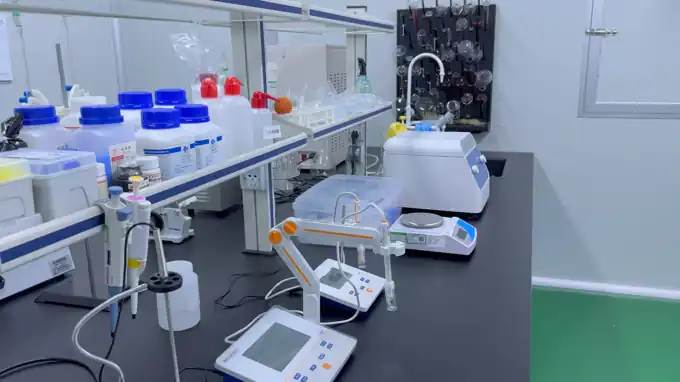
Before calculating how many tubs or stick packs a batch will yield, our Shenzhen solid-beverage engineering team measures both loose bulk density and tapped bulk density:
- Fluffy Botanical & Fiber Blends (0.35–0.48 g/cm³): Inulin, psyllium husk, and spray-dried herbal extracts occupy massive volume. In a 1000 L blender filled to the 650 L working limit, gross batch weight is only 227–312 kg.
- Standard Amino & Protein Blends (0.45–0.60 g/cm³): Whey isolate and BCAA blends yield roughly 290–390 kg per 650 L working load, requiring de-aeration before stick-pack auger filling.
- Heavy Crystalline & Mineral Blends (0.65–0.85 g/cm³): Electrolyte salts, creatine monohydrate, and granular erythritol pack densely, yielding 420–550 kg per batch in the exact same vessel.
Even after blending, gross mixer weight never equals packable weight. You lose 3% to 5% in dust collection filters, sifter retention, and initial auger purge on canister lines. On multi-lane stick-pack machines, film alignment and seal-jaw testing consume an extra 2% to 4% on smaller runs.
What Happens on the Filling Line When Density and Humidity Are Ignored
Low-density powders without flow conditioning bridge inside the auger hopper, causing wild fill-weight swings (such as a 5 g stick pack fluctuating between 4.1 g and 5.8 g). Worse, fine electrostatic dust floats into vertical sealing jaws, burning into the laminate film and causing micro-leaks during sea transit.
Shenzhen Facility Mandatory Powder Stress Protocol
To prevent caking and seal failure in maritime shipping containers, every powder SKU must pass three physical gates before mass production release:
6 Engineering Specs to Lock Before Accepting a Powder Quotation
Instead of accepting a flat per-unit quote, require your contract manufacturer to lock these six production parameters on your cost sheet:
Need an Exact Batch Sizing & Net Yield Calculation?
Send us your formula BOM, target serving weight, and packaging format. Once the formula and materials are confirmed, ask our Shenzhen engineering team to confirm the vessel-fill calculation and the sampling and production schedule for your project.
Frequently Asked Questions
Is a powder commercial MOQ the same as a mixer's minimum batch load?
No. Commercial MOQ is the minimum unit count (e.g., 3,000 tubs or 50,000 sticks) required to justify packaging setup, while mixer minimum load is the physical volume (40%–70% of vessel capacity) needed to blend raw materials uniformly without segregation.
Why can't a 1000 L mixer produce 1000 kg of finished powder?
A 1000 L vessel can only be filled to 600–700 L so the powder has headroom to fold. Because most dietary powders have a bulk density between 0.40 and 0.75 g/cm³, that 650 L working volume weighs 260 kg to about 488 kg before deducting 3%–8% packaging line loss.
Do I need a full commercial batch to test powder flow and anti-caking?
No. We run 3-day pilot trials on lab-scale blenders and single-lane auger fillers to measure bulk density, angle of repose, and 5-second solubility, followed by 45°C / 85% RH accelerated humidity testing before you commit to commercial tooling.
Can I split one mixer batch across two flavors or two packaging formats?
You can easily split one unflavored master batch into two packaging formats (such as tubs and trial sticks). Splitting flavors requires discharging the base blend into secondary ribbon blenders for flavor plating, which adds a nominal washdown and sub-lot testing fee.