Creatine Format Changes How Brands Test Flavor and Potency
Creatine Format Changes How Brands Test Flavor and Potency
- Compare the same 5 g example by serving mass across powder, liquid, gummy, capsule and tablet concepts. Verify the unit count and label basis separately.
- A 2-unit serving delivering 5 g of creatine monohydrate needs 2.5 g per unit before excipients. Treat the math as a feasibility check.
- Where applicable, Lifeworth uses 45 °C and 85% RH for 21 days for powder packs and a separate 50 °C screen for gummies over 14 days.
Start with the serving the buyer can actually use
Set the dose and how the customer will take it. Powders let buyers compare flavors under a fixed preparation method. Capsules, tablets and gummies need an achievable fill or unit mass. Ready-to-drink concepts need potency and physical stability data in the intended container.
Use the format to decide what to measure first
The 5 g target is an illustration. Confirm the declared ingredient basis and determine a feasible unit size in the pilot.
| Format | Example target | First check |
|---|---|---|
| Powder | 5 g in one serving | Clumps and sediment |
| Liquid | 5 g per planned serving | Assay through storage |
| Gummy | 2 units, 2.5 g each | Texture and potency |
| Capsule | 5 g across several units | Fill mass and count |
| Tablet | 5 g across several units | Unit size and integrity |
Repeat the same preparation or storage conditions
For applicable pilots, Lifeworth screens powder packs for 21 days at 45 °C and 85% RH. The gummy screen uses 50 °C for 14 days. Set format-specific criteria for caking, sticking, weeping, and assay. Use a product-specific stability plan for the shelf-life claim.
Compare each flavor at the same serving, water volume, temperature, stir time and observation interval. For an aqueous product, specify the analytical method and measure potency over the chosen storage conditions alongside changes in appearance and taste.
21 CFR 111.70 on specifications · 21 CFR 111.75 on determining whether specifications are met
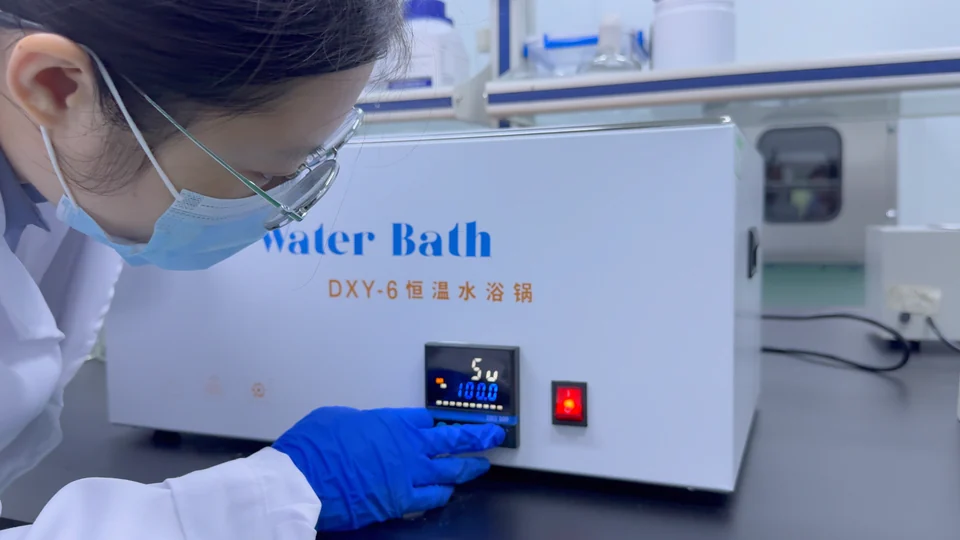
Temperature control at the Lifeworth bench. Use the same water temperature and preparation protocol when comparing flavored powder samples.
Give each format the same procurement questions
Specify the active form, serving mass, and target unit count.
Provide a reference and agree on the repeatable evaluation method.
Ask for the finished-product specification, lot COA, assay basis and sampling plan.
Approve the packaging for pilot and agree on stability and transport checks.
Send the serving target, preferred format, sample flavor, and destination market for a feasibility review. For eligible projects with approved specifications and available materials, Lifeworth can target 3 days for samples, 25 days for a first order, and 15 days for a repeat order. Confirm dates against the agreed scope.
Frequently asked questions
Should the first powder be flavored or unflavored?
Use the base as a control. Compare any flavor against it under the same preparation method to see what the blend changes.
Does the same creatine grade fit every format?
Confirm form, grade, fill constraints and analytical method for each format. Qualification in a dry powder does not establish performance in a liquid or gummy.
What does a lot COA add?
It identifies the lot and reports measured results. Pair it with the current specification to determine whether those results meet the agreed limits.
When can the buyer approve the flavor?
After repeating the agreed sensory and preparation checks at the intended serving and recording the sample revision.