A Supplement Claims Review Starts Before the Label Goes to Print
A Supplement Claims Review Starts Before the Label Goes to Print
- Review the 3 common claim categories separately. Nutrient content, health, and structure/function claims each have their own rules.
- For applicable U.S. structure/function labeling claims, the firm must notify FDA no later than 30 days after first marketing with the claim.
- Keep 1 revision-controlled evidence record per claim and review every channel in which the wording or implied message appears.
Start with the exact words and artwork
Save the front panel, product page, inserts, and ad variants for each SKU. Log both the written sentence and what a buyer could infer from a headline, image, testimonial, or comparison. Put the formula version and intended serving beside the claim before anyone evaluates the evidence.
Assign the work according to the claim category
This is a workflow for U.S. projects. Check the category and exact conditions before using a claim.
| Claim category | Review evidence | Decision before release |
|---|---|---|
| Nutrient content | Actual nutrient amount | Check defined terms |
| Health | Applicable authorization or qualified wording | Confirm exact conditions |
| Structure/function | Substantiation and formula match | Check disclaimer and notice |
Compare the printed claim against the batch specification
For a claim tied to a named ingredient or amount, match the label proof to the formula revision and the relevant finished-product test method. Follow one test result from unit and method through the approver’s sign-off. Record which other signals in the artwork depend on the same evidence.
Keep label review and advertising review on separate sign-off lines. For applicable U.S. labeling claims, record the first marketing date, disclaimer check, and person responsible for FDA notification. Review ads for the express and implied claims the audience will see in each placement.
FDA guidance on structure/function claim notifications · FTC Health Products Compliance Guidance
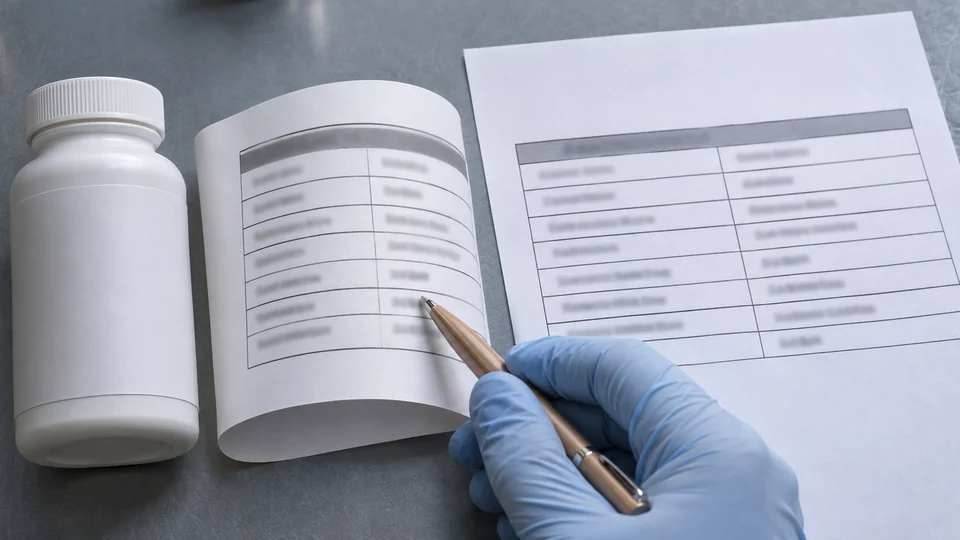
Illustration of a label proof reviewed alongside a batch specification. Match the ingredient and serving amount on the proof to the approved formula revision before printing.
Create a release record the next reviewer can use
List the exact wording, copy version, artwork, and channel.
Check studied ingredient, form, serving, and population against the finished SKU.
Record who owns label review, advertising review, and any notice.
Reopen the file when formula, serving, wording or channel changes.
Share the draft label, intended market, formula revision, and list of claims early so the manufacturing brief can identify which measurements the factory can support. For eligible projects with approved specifications and available materials, Lifeworth can target 3 days for samples, 25 days for a first order, and 15 days for a repeat order. Confirm dates against the agreed scope.
Frequently asked questions
When is the 30-day clock measured?
For applicable U.S. claims, count from first marketing the supplement with the claim. Record the date and assign the notification owner.
Does the same evidence cover a new serving?
Check the actual amount, form and conditions of use again. A dosage change can change the fit between the evidence and the claim.
Who should review website copy?
Assign the advertising copy to a reviewer who can evaluate the context and implied message. Keep that decision alongside the label file.
What can a COA substantiate?
A lot COA can document specified test results. Keep separate scientific evidence for any relevant health-related effect.